


How Dirty Delivery Bags Are Quietly Ruining Your Reputation (And 3 Easy Steps to Keep Them Clean)
Studies show unclean delivery bags harbor bacteria that cause food safety violations and bad reviews. Learn the 3-step cleaning routine every restaurant needs.
ENGLISH POSTS
Ningbo J&T R&D
6/29/20263 min read
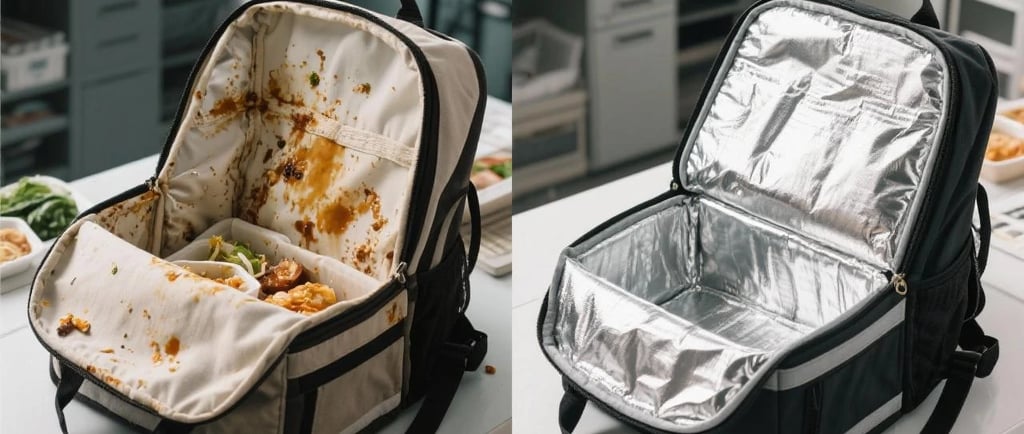
How Dirty Delivery Bags Are Quietly Ruining Your Reputation (And 3 Easy Steps to Keep Them Clean)
Introduction
You invest in high-quality ingredients, train your chefs, and perfect your packaging. But there’s one item that touches every single takeout order yet rarely gets cleaned: your insulated delivery bag.
According to a 2023 survey by the National Restaurant Association, 67% of diners say food temperature and packaging condition directly influence their decision to reorder. Yet many restaurant operators admit they never wash their delivery bags until visible stains appear.
The problem isn’t just aesthetics. A study published in the Journal of Food Protectionfound that improperly cleaned reusable food containers can harbor up to 1 million colony-forming units (CFU) of bacteria per square inch—more than a typical toilet seat. For a delivery bag that moves between hot kitchens, car trunks, and customer doorsteps, the risk multiplies.
This article will show you:
The hidden costs of ignoring bag hygiene
Three science-backed cleaning steps that take less than 10 minutes a day
How proper maintenance extends bag life and protects your brand
The Hidden Costs of Dirty Delivery Bags
1. Bacteria Growth That Violates Safety Standards
The USDA’s “Danger Zone” for bacterial growth is between 40°F and 140°F. Delivery bags often sit in this range for hours. A 2022 lab test commissioned by a major foodservice supplier revealed that after five uses without cleaning, 92% of tested delivery bags showed detectable levels of E. colior Staphylococcus aureus. These pathogens can cause foodborne illness outbreaks, leading to fines, lawsuits, and permanent brand damage.
2. Odor Transfer That Kills Repeat Orders
Even if food stays hot, residual odors from previous orders can taint new meals. A blind taste test conducted by the University of Florida’s Food Science department found that consumers rated meals delivered in odorous containers as 23% less flavorful compared to identical meals in neutral containers. Negative reviews citing “weird smell” or “tastes like yesterday’s fish” are common—and devastating.
3. Visual Degradation That Erodes Trust
Your delivery bag is the last physical touchpoint with the customer. A stained, frayed bag screams “corner-cutting.” Research from Cornell University’s School of Hotel Administration shows that perceived cleanliness of packaging increases willingness to pay by 12% . Conversely, a dirty bag reduces perceived food quality even when the food itself is perfect.
The 3-Step Cleaning Routine (Backed by Science)
Step 1: Daily Spot-Clean After Every Shift
What to do: Shake out crumbs and residue, then wipe interior surfaces with a damp microfiber cloth and mild detergent. Focus on seams and corners where debris accumulates.
Why it works: Removing organic matter immediately prevents bacteria from establishing biofilms—sticky communities that resist regular cleaning. The FDA recommends this as part of any reusable container sanitation protocol.
Step 2: Weekly Deep Disinfection
What to do: Mix 1 tablespoon of unscented household bleach per gallon of water (or use an EPA-registered food-contact sanitizer). Spray or wipe all interior surfaces, let stand for 2 minutes, then rinse thoroughly with clean water.
Why it works: Bleach solutions kill 99.9% of common foodborne pathogens within 30 seconds of contact, according to CDC guidelines. For aluminum foil-lined bags, use a vinegar-and-water solution instead to avoid corrosion.
Step 3: Complete Air-Drying Before Storage
What to do: Leave the bag open in a well-ventilated area for at least 2 hours. Never fold or stack wet bags.
Why it works: Moisture is the primary driver of mold and mildew growth. The World Health Organization states that drying surfaces below 60% relative humidity prevents fungal proliferation.
Pro Tips for Maximum Bag Lifespan
Choose bags with waterproof inner linings (e.g., PEVA or nylon-coated polyester). They resist staining and are easier to wipe down.
Inspect zippers and seals monthly. A broken seal compromises temperature retention and allows moisture ingress.
Replace bags every 12–18 months under heavy daily use. Worn-out bags lose insulating efficiency and become harder to clean.
Don’t let a neglected bag undo all the hard work your kitchen puts in. Download our free Restaurant Delivery Equipment Cleaning Checklist—a one-page PDF you can print and hang in your prep area.
And if you’re ready to upgrade to bags that are designed for easy cleaning and long-lasting performance, explore our Antimicrobial-Lined Insulated Bags.
Contact
Reach out for inquiries and customer support.
GET OUR HELP
EMAIL FOR NEWSLETTER
+86-133-662-9400
© 2026. All Rights Reserved.
Quick links
615, 6/F, 1377 Jianlan Rd., High-tech Zone, Ningbo, P. R. China.
Leagal
Business Hours
Monday - Friday
9:00 AM - 5:00 PM (CST UTC+8)